Wedding Planning
From Ceremony to Reception: Plan the Room Reset
Treat the change between two beautiful settings as a sequence of agreed handovers, not an invisible gap.
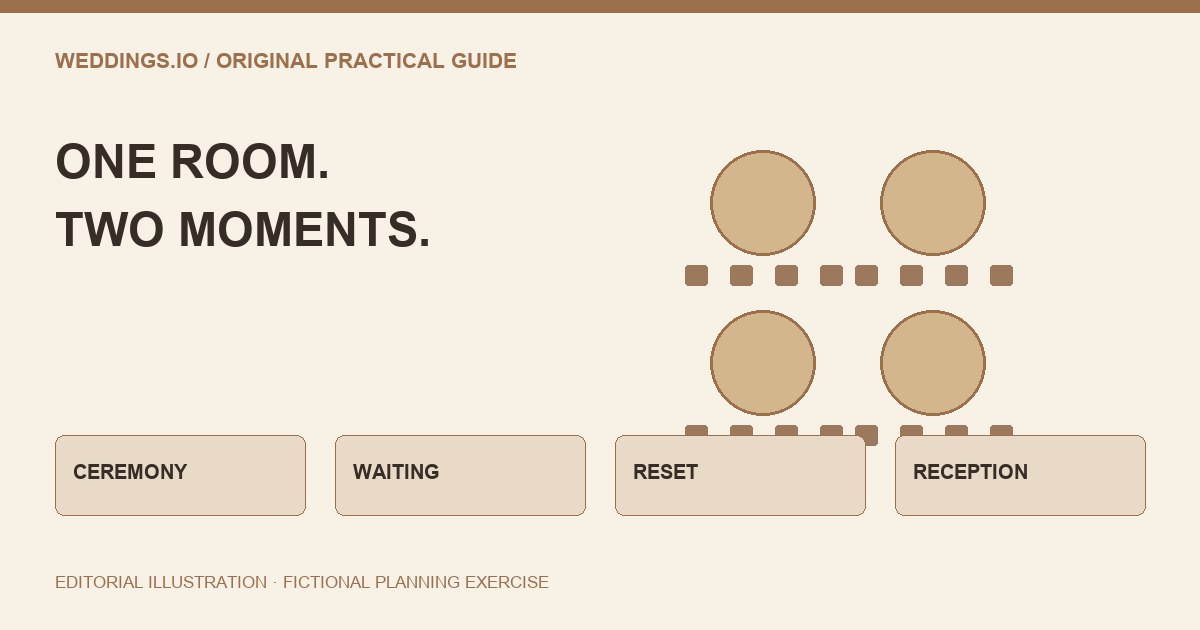
Original explanatory illustration by Weddings.io Editorial. A fictional planning diagram, not a wedding photograph or app screenshot.
Look at the space between the photographs
A ceremony layout and a reception layout can each look complete while the transition between them remains unexplained. This original Weddings.io practical guide focuses on that middle period: where guests wait, who moves what, and how the next team knows the room is ready. It is a planning exercise, not a venue operating instruction or a claim that any particular turnover time is achievable.
Draw two layouts and one waiting place
Ask the venue which layouts it can support and who must approve them. Mark where guests go while the space changes, where suppliers can enter, and which areas stay available. Do not assume an empty corridor is a permitted waiting area. The venue controls its own access and operational procedures. The couple needs a clear guest journey that works alongside those requirements, not a drawing that overrides them.
Identify what actually changes
List the objects and setups that move: chairs, ceremony decor, tables, sound equipment, signage or personal items. Identify what remains in place. A reused floral arrangement may need its own handling and transport plan; it is not automatically free labour because it already exists in the room. Ask the relevant supplier whether moving or resetting it is within the agreed scope. Record any decision that changes their work or staffing.
Build the sequence with the working team
Invite the venue and relevant suppliers to describe dependencies. A table cannot be dressed while it is still being placed; a sound check may need a quiet room. Use their estimates rather than deriving a turnaround duration from a social-media clip. Record which task releases the next task and who confirms that release. Leave uncertain timing visible until the responsible business has reviewed it.
Create a guest-facing instruction
Guests do not need the full production schedule. They need to know where to go, what is available while they wait and who can answer a routine question. Keep signage and spoken instructions consistent. Consider the needs guests have told you about directly, and ask the venue how to make the waiting arrangement workable. Do not publish private accessibility or health details in a general schedule.
Name the person who accepts the room
Completion is more useful when it has a recipient. Agree who checks that the room is ready for the next phase and which suppliers must finish their own checks first. This is not a substitute for venue safety procedures or professional equipment checks. It is a communication step: the room has moved from one agreed use to the next, and the appropriate people know what is still outstanding.
Rehearse a delay without blaming anyone
Try one invented scenario: a speech runs late and a supplier cannot start the next task at the expected time. Who receives the revised instruction? Which guest message changes? Who has authority to approve a different sequence? An exercise can expose a missing decision without predicting a real failure. Keep any change to contracted work with the people entitled to agree it.
Keep the final plan small enough to use
Create a one-page transition summary with the two layouts, waiting location, task sequence, responsible contacts and latest revision. Keep detailed supplier documents available separately. Review the summary together rather than assuming a shared file equals agreement. For the information handover itself, read our wedding-day contact-sheet guide. For the end of the celebration, the rental-return plan covers a different question: who owns the final box.