Wedding Planning
Multi-Day Indian Wedding Logistics: Mehndi, Sangeet, Baraat, Ceremony, Reception
The 5-event production plan — timing, vendor sequencing, guest flow, and the operational rules that keep a 4-day wedding on schedule.
A complete operational plan for a 4-day Indian wedding — mehndi, sangeet, baraat, ceremony, and reception — with timing, vendor sequencing, and the logistics rules that prevent collapse.
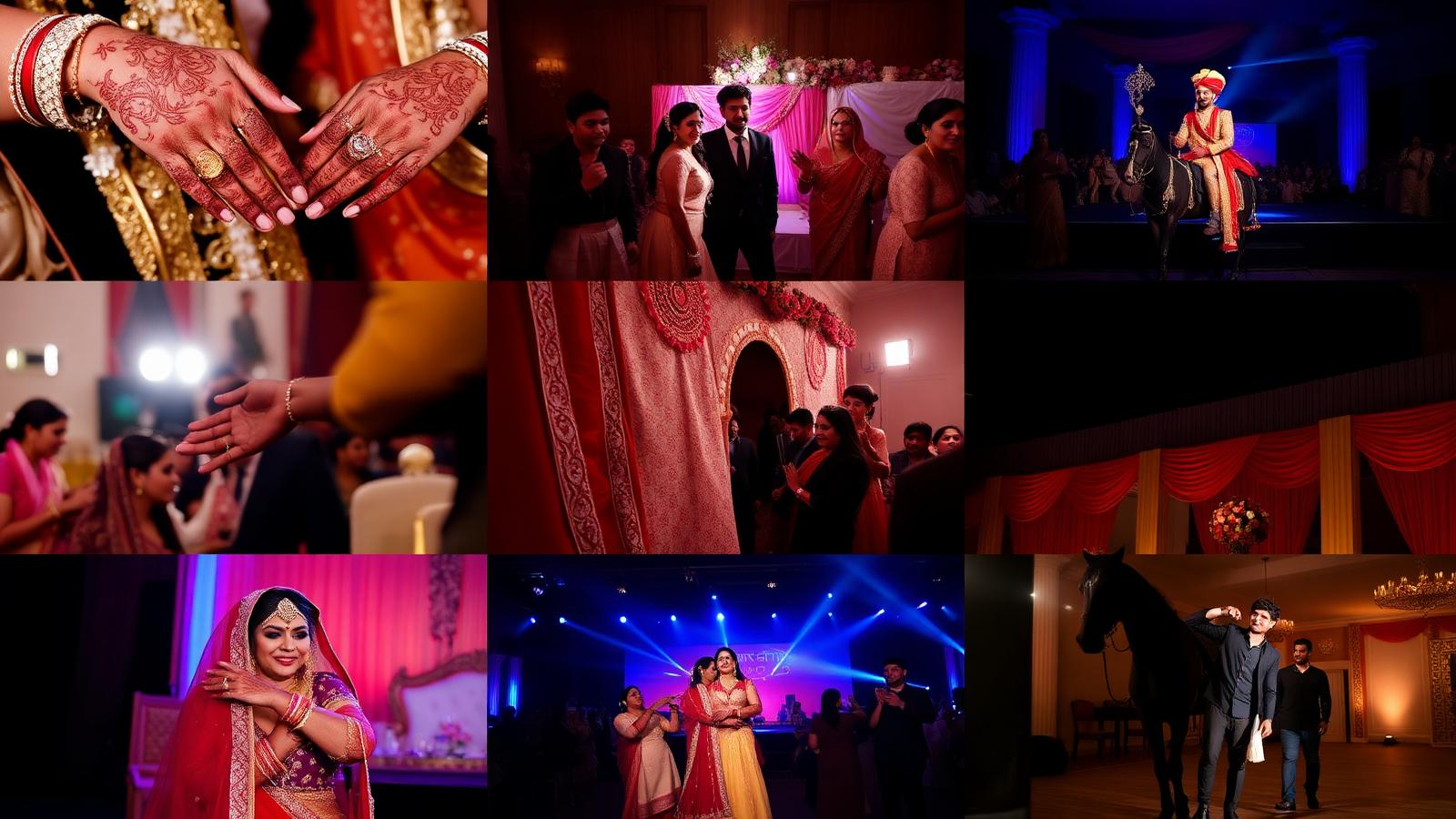
A traditional Indian wedding is a 4-day, 5-event production with overlapping vendor crews, multi-venue load-ins, and guest groups that grow and shrink across functions. Weddings.io has logged the operational data from over 9,000 South Asian weddings since 2015, and the pattern is consistent: weddings fail at the seams between events, not inside them. This is the operational plan that keeps a 4-day wedding on schedule from mehndi through reception.
Day -1 (Mehndi): the mehndi function is the soft-launch of the wedding and serves three operational purposes. It gives 4 to 6 hours of mehndi application time per guest (henna requires 6 to 8 hours of total dry time before guests can change clothes), it lets out-of-town family arrive and sync logistically before the high-pressure events, and it staggers vendor load-in. Mehndi venues are usually homes or small banquet halls with capacity for 60 to 150 guests. Catering is light — chaat, lunch buffet, mocktails. The mehndi photographer is typically a single shooter, not the full team.
Mehndi timing rule: end the function no later than 6 PM. Henna applied after 6 PM is not dry by sangeet morning, and bridal mehndi specifically requires 8 to 10 hours of dry time for the dark stain. The bride's mehndi is applied last, often in a private session 4 to 6 hours after the guest mehndi opens, so the design has the longest dry window before sangeet.
Day 0 (Sangeet, evening): the sangeet is the highest-energy event and the most operationally complex single function. It involves choreographed performances by both families, a DJ-or-live-music setup, full dinner catering, a dance floor, and a stage with lighting and AV. Vendor count peaks here: DJ, lighting tech, AV tech, dhol player, choreographer-on-call, photo team, video team, decor crew, catering team, and bartenders. A 300-guest sangeet requires 22 to 28 staff on-site at peak.
Sangeet sequencing rule: rehearsal of all family performances must be completed 6 to 8 hours before guest doors open, with full DJ and lighting cues confirmed during the rehearsal. Sangeet rehearsals on the day of the function are the single highest predictor of an event running 90+ minutes late. The performances themselves should be capped at 12 to 16 minutes total — beyond that, the dance floor never opens and guests leave before the late-night menu.
Day 1 (morning Hindu ceremony or Sikh Anand Karaj): the religious ceremony is the structurally simplest event but the most time-sensitive because the muhurta (auspicious time) is fixed by the priest weeks in advance. Vendor load-in for the ceremony venue starts the night before — mandap or palki sahib install is a 4 to 7 hour process. The priest's setup (agni kund, samagri, photographs of deities) takes 60 to 90 minutes morning-of. The bride's hair, makeup, and attire requires 4 to 5 hours of artist time before she is ready to leave for the venue.
Baraat (groom's procession) operational rule: the baraat is choreographed chaos and must end at the ceremony venue at least 30 minutes before the muhurta. The baraat itself runs 30 to 60 minutes (horse, dhol, family dancing, sometimes a baraat band). The milni (formal greeting between the two families) at venue arrival adds 20 to 40 minutes. Underestimating either is the most common reason ceremonies start late and run into catering windows.
Lunch after the ceremony serves 200 to 600 guests in a tight 90-minute window. The catering team needs the kitchen prepped and live stations heated by the time the saat phere completes. The Weddings.io operational rule: brief the catering captain on the muhurta ±15 minutes, not the contracted ceremony end time. Ceremonies routinely end 20 to 45 minutes off-schedule and catering must flex to the actual finish, not the spreadsheet.
Day 1 evening or Day 2 (Reception): the reception is the largest guest-count event (typically 300 to 700) and the most production-heavy. It includes a cocktail hour, formal entry, first dance, family speeches, dinner service, cake cutting, and a 2-to-4-hour dance floor. The vendor crew expands again to include the reception decor team (separate from sangeet decor), the bar team (separate from catering), the late-night snack team, and often a same-day-edit videographer producing a highlight reel for end-of-night playback.
Reception timing rule: build the run-of-show backwards from the contracted end time, not forward from the start. If the venue contract ends at midnight with $2,000-per-hour overtime, the dance floor must open by 9:45 PM to deliver a 2-hour party before last call. Dance floors that open after 10 PM never deliver the visual energy reception videos need, and reception overtime is the largest single source of unbudgeted wedding cost.
Vendor handoff rule across days: the same coordinator must hold the line from sangeet rehearsal through reception breakdown. Handing off between day-of coordinators between events is the second-largest source of operational failure (the first is the baraat-to-ceremony transition). Weddings.io planners assign one lead coordinator with one assistant per 100 guests, on-site for the entire run.
Guest logistics across 4 days: out-of-town guests need transportation between hotel, mehndi, sangeet, ceremony, and reception venues. Shuttle buses (50-passenger) cost $1,800 to $3,500 per day in North America in 2026 and reduce parking and timing chaos by 60 to 80 percent. Welcome bags delivered to hotel rooms with the printed schedule, contact card for the day-of coordinator, and basic essentials (water, snacks, mints) prevent 90 percent of guest questions during the wedding itself.
Catering coordination across the 5 events requires one master menu document with portion counts per event, dietary tracking (vegetarian, jain, vegan, halal, allergies) per guest, and confirmed start/end times for each meal service. The Weddings.io Green Light Dashboard turns this into a real-time vendor status grid so the planner sees at a glance which kitchen is prepped, which bar is stocked, and which event team is on-station — without 200 text messages during the wedding.
Documentation across the 4 days: the photo and video team needs a shot list per event (group photos at ceremony, choreography highlights at sangeet, candid family moments at mehndi, reception speeches and first dance), and a delivery contract specifying which deliverables are due in what order (typically: same-day reception highlight reel within 48 hours, edited photos within 6 to 8 weeks, highlight film within 10 to 14 weeks, long-form film within 16 to 20 weeks). Vague photo contracts are the #1 source of post-wedding disputes.
Breakdown logistics are the silent killer of multi-day weddings. Decor breakdown is contractually 90 to 180 minutes after event end, but venues commonly require complete vacate within 60 minutes. The mismatch creates overtime charges, vendor friction, and lost decor inventory. Negotiate breakdown windows in the venue contract before the decor contract is signed, and confirm in writing 7 days before the event.
The Weddings.io operational rule that prevents 80 percent of multi-day failures: a 90-minute pre-event production meeting with all vendors on-site or on video, 24 to 48 hours before the wedding starts. Confirm load-in times, contact numbers, scope, gratuity sequence, and breakdown windows in writing in the same room. Vendors who decline the production meeting are the vendors who fail the wedding. With this discipline, a 4-day, 5-event, 25-vendor production runs as predictably as a 2-day corporate offsite — and looks like a celebration, not a logistics exercise.
Attire logistics across a multi-day Indian wedding are frequently under-planned. The bride alone may have 4 to 6 outfit changes across the mehndi, sangeet, haldi, ceremony, and reception. Each change requires a designated change room, a stylist or assistant on standby, a 15 to 20 minute changeover window built into the run-of-show, and a garment bag and hanging space confirmed with the venue in advance. The groom typically changes 2 to 3 times. Coordinating both attire timelines against the event flow — especially when the bride needs 45 minutes for hair and makeup between ceremony and reception — is one of the most common places where the timeline collapses.
Decor and florals across 4 days require a dedicated logistics coordinator separate from the wedding planner. The mehndi decor, sangeet stage design, ceremony mandap, and reception centerpieces are often managed by different vendors or sub-teams within the same decor company. Each requires its own load-in window, setup crew, and breakdown timeline. Without a dedicated decor coordinator tracking all four simultaneously, setup crews arrive in the wrong order, flowers are staged in the wrong room, and the setup photo that the couple paid thousands of dollars for captures an unfinished room.
Sound and AV across 5 events is a separate production line. The sangeet requires a full DJ setup with dance floor lighting and a stage for family performances. The baraat requires dhol players, a speaker on a cart or carried by crew, and in some cities a horse or vintage car. The ceremony may require a priest's microphone, a sound system for shlokas, and a separate feed to an overflow room. The reception requires the full DJ setup again, a band feed if applicable, and a presentation system for slideshows and speeches. Each of these is a separate setup and breakdown cycle. A single AV company that can manage all 5 events reduces the coordination load significantly and prevents the sound failures that stem from handoffs between crews.
The financial management of a multi-day Indian wedding requires a dedicated payment schedule document separate from the overall budget. Vendors across 4 days have different deposit structures, final payment timing, and gratuity expectations. The photographer expects final payment 2 weeks before, the caterer on the day, the DJ at the end of the event, and the decor company at breakdown. Missing one payment window because the couple is in hair and makeup triggers a service disruption that cascades through the day. Weddings.io coordinators maintain a payment schedule document with all amounts, due dates, and delivery mechanisms confirmed with each vendor in writing at least 30 days before the wedding starts.
Frequently asked questions
- How many days is a traditional Indian wedding?
- A traditional Indian wedding is a 4-day, 5-event production: mehndi (Day -1), sangeet (Day 0 evening), Hindu ceremony or Sikh Anand Karaj plus baraat (Day 1 morning), and reception (Day 1 evening or Day 2). Some families add a tilak or roka function pushing it to 5 days.
- What is the order of an Indian wedding?
- The standard order is: mehndi, sangeet, haldi (often combined with mehndi morning), baraat and ceremony (Hindu or Sikh), wedding lunch, and reception. The bidaai (bride's farewell) occurs after the ceremony, before the reception.
- How long does an Indian wedding ceremony take?
- A full Hindu wedding ceremony with all rituals takes 2.5 to 4 hours. A Sikh Anand Karaj takes 1 to 1.5 hours. A nikah for a Muslim wedding takes 30 to 60 minutes. The muhurta (auspicious time) is fixed by the priest and dictates ceremony start.
- What is a baraat in an Indian wedding?
- The baraat is the groom's procession to the wedding venue, traditionally featuring the groom on a horse, dhol drummers, and family members dancing alongside. It runs 30 to 60 minutes and ends at the ceremony venue at least 30 minutes before the muhurta.
- How many vendors do you need for an Indian wedding?
- A 4-day Indian wedding for 400 guests typically uses 25 to 40 vendors including planner, multiple caterers, decor and floral teams, mandap vendor, photo and video teams, DJ, lighting and AV, dhol players, makeup artists, transportation, and bar and beverage.
- When should I start planning an Indian wedding?
- Start 12 to 18 months before the wedding date. Venue and catering must be locked 12 months out, planner and photo/video 10 to 12 months out, mandap and decor 8 to 10 months out, and stationery and attire 6 to 8 months out for peak season weddings.