Wedding Decor
Mandap Design Guide: Sizes, Materials, Costs, and Vendor Selection in 2026
A working reference for couples and planners on mandap dimensions, structural materials, decor styles, and how to vet a mandap vendor.
Everything couples and planners need to specify a mandap in 2026 — dimensions, materials, decor styles, costs, and how to vet a mandap vendor on Weddings.io.
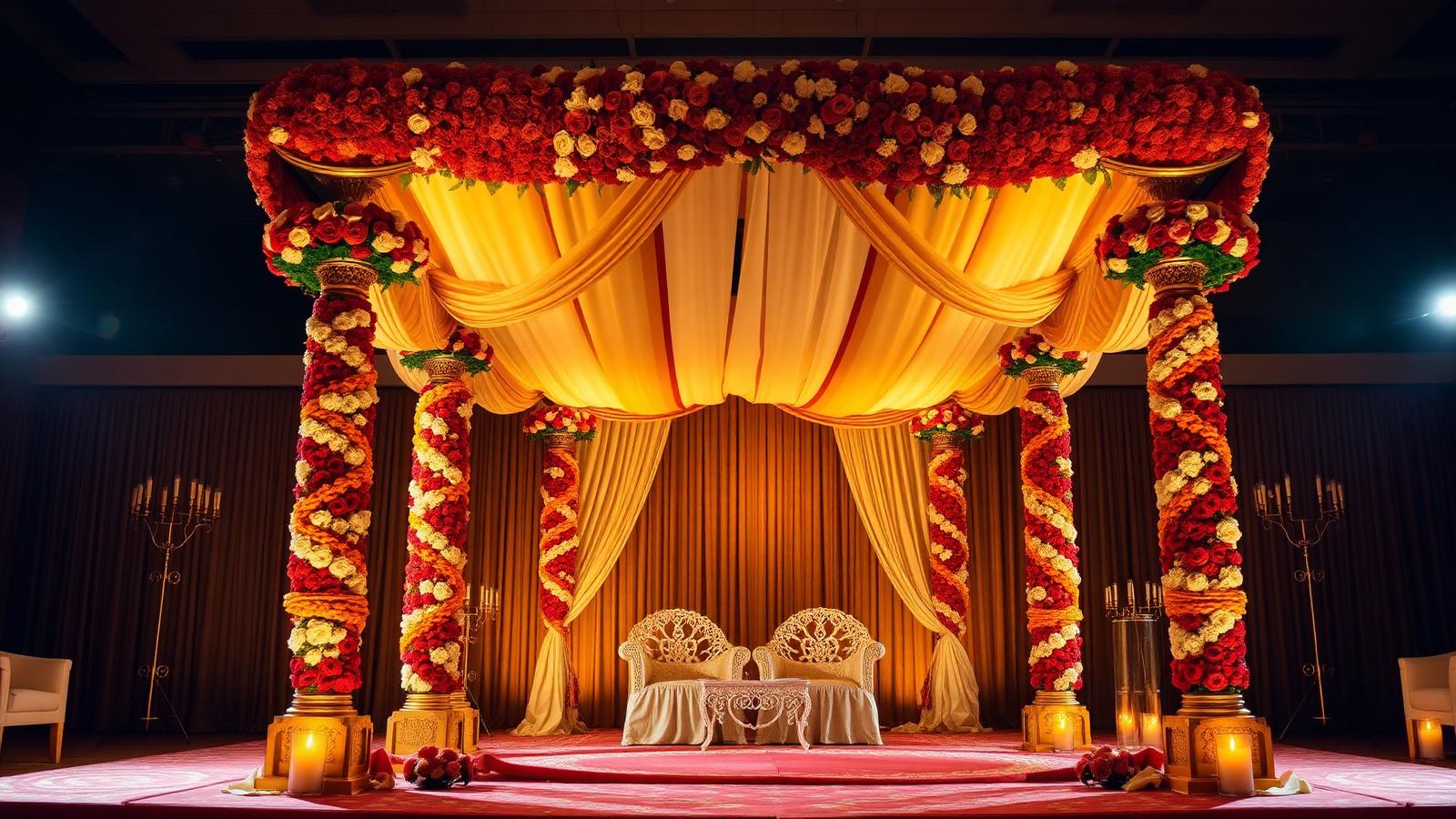
The mandap is the structural and ceremonial centerpiece of a Hindu wedding — a four-pillared canopy under which the saat phere (seven sacred steps) and the saptapadi vows are performed. Specifying a mandap is not a decor decision; it is an architectural one. Dimensions, load-bearing materials, sightlines for guests and cameras, and clearance for the priest, the bride and groom, and the parents must all be planned together. This guide is the working reference Weddings.io planners use to scope mandap vendors in 2026.
The standard mandap footprint for a wedding with 200 to 500 guests is 10 feet by 10 feet (3 m x 3 m), with a platform height of 12 to 18 inches and a canopy height of 9 to 11 feet. This size comfortably seats the bride, groom, two sets of parents (4 adults), and the priest with the agni kund (sacred fire vessel) at center. For weddings with more than 500 guests or for camera-heavy productions, the footprint scales to 12 ft x 12 ft (3.6 m square) with a canopy height of 11 to 13 feet so wide-angle and drone shots clear the canopy. Below 200 guests, an 8 ft x 8 ft mandap is acceptable but tight once 6 adults are seated.
The four pillars define the visual identity of the mandap. In 2026, the four most-requested pillar materials are: carved teak or sheesham wood (premium, $6,000 to $18,000 of the total mandap cost), brass or gold-leaf-finished metal (luxury, $8,000 to $22,000), white marble-look fiberglass (modern temple aesthetic, $3,500 to $8,000), and floral-wrapped acrylic columns (contemporary, $2,500 to $6,500). Each material drives a different decor language — carved wood pairs with traditional florals and brass urlis, while fiberglass and acrylic pair with minimalist drape and ambient lighting.
The canopy is the second structural decision. A flat canopy is the simplest and cheapest ($800 to $2,500 in fabric and rigging), but it limits ceiling decor. A pitched or domed canopy (commonly 18 to 30 inches of rise at the apex) provides the visual lift that floral installations or hanging jasmine require, at $2,500 to $7,000. A double-tier canopy with a smaller crown above the main canopy is the most photographed configuration in 2026 and runs $4,500 to $12,000 in structure alone, before florals are added.
Floral treatments in 2026 fall into four categories at predictable price points. Full ceiling florals — orchids, roses, hydrangeas covering the entire canopy underside — cost $8,000 to $35,000 depending on flower type and density. Pillar wraps with cascading floral garlands run $3,500 to $14,000 for the full set of 4. Marigold and jasmine traditional treatments (the most culturally classic) sit at $2,500 to $9,000. Drape-with-floral-accents is the fastest-growing 2026 trend and prices at $3,000 to $8,500 — comparable visual weight to full florals at 30 to 50 percent of the cost.
The platform under the mandap is where most couples under-spec. Standard banquet-grade staging is fine for a flat ceremony but cracks under the weight of full carved wood pillars. For weddings with structural pillars, the platform must be 6 ft x 6 ft minimum at the center with reinforced joists rated for 1,500 lbs distributed load. Skirting, riser steps (typically 2 risers of 6 inches each), and a center medallion or chunni-draped floor add $1,200 to $4,500. Acrylic LED-lit platforms add $2,500 to $6,000 and are increasingly common in reception-style mandap designs.
Sightlines and camera planning matter as much as decor. The mandap should be elevated 12 to 18 inches above the guest floor and positioned so the front guest row sits at least 8 to 10 feet from the platform edge — this is the minimum distance for the photographer's primary lens (24-70mm or 70-200mm) to frame the bride, groom, and priest cleanly. A center aisle of 6 feet minimum allows the bride's procession with both fathers and any bridesmaids. Drone clearance requires the canopy to sit at least 6 feet below the ceiling at indoor venues; outdoor venues need wind-load planning above 25 mph.
Lighting design transforms the same mandap structure into completely different aesthetics. The four functional lighting zones are: pin-spots on the bride and groom (warm 2700K, narrow beam), uplight on the four pillars (warm white or color-washed to match decor), wash light on the back drape (color-shifting or static), and a soft fill light from the front for video (5500K, diffused). Full mandap lighting design with rigging, dimmers, and a tech operator runs $2,200 to $7,500 in 2026. Skip the technician at your peril — DIY lighting is the #1 reason mandap photos look amateur.
Lead time is the constraint planners forget. Custom-built carved wood mandaps require 8 to 14 weeks of fabrication. Floral installations require 4 to 6 weeks of vendor coordination for sourcing, particularly for imported orchids and hydrangeas. Even rental mandaps from established Weddings.io vendors should be confirmed 12 to 16 weeks before the wedding date during peak season (April-July, October-December). Booking inside 8 weeks limits couples to inventory designs only — no customization.
Mandap vendors fall into three categories on Weddings.io. Full-service mandap specialists handle structure, decor, florals, lighting, install, and breakdown as one contract — best for couples who want a single point of accountability. Decor companies subcontract the mandap structure to a fabricator and handle florals and styling themselves — best when the planner wants design control. Florists who add mandap rentals as a secondary service should be vetted carefully — structural stability and load-bearing pillar joints are not floral skills and have caused mid-ceremony collapses we have specifically tracked.
How to vet a mandap vendor in 2026: ask for 3 photos of the exact mandap design built in the last 12 months (not stock images, not Pinterest references), confirm the structural drawings and pillar material on paper, verify insurance ($2 million general liability minimum for any structure guests will sit near), and check the install and breakdown timing against the venue's load-in window. Weddings.io vendors are KYC-verified, which means business identity, insurance, and license documents are validated before they appear in search.
Mandap rental versus custom-build: 80 percent of weddings under $150,000 total budget should choose rental — modern rental inventories include carved wood, fiberglass, and floral-pillar options at 30 to 50 percent below custom-build pricing. Custom-build makes financial sense above $150,000 total budget when the couple wants a specific design language (a particular regional aesthetic, a cultural fusion, a designer-led look) that is not in the rental inventory. Custom-build also makes sense when the same family is hosting 2 weddings within 18 months and can amortize the build across both.
Regional aesthetic variations to specify in the brief: South Indian temple-style mandaps emphasize stone-look pillars, gopuram-inspired toppers, jasmine garlands, and brass lamp accents. Punjabi Sikh palki-influenced mandaps (for Hindu Punjabi weddings) lean into marigold-and-rose canopies with white-and-gold drape. Bengali mandaps incorporate alpana floor patterns and red-and-white color blocking. Gujarati mandaps emphasize mirror work, vibrant color, and shorter pillar profiles. North Indian Marwari mandaps push toward heavy floral density and gold-leaf detail. Specifying the regional intent at the brief stage prevents 4 weeks of revisions.
The 2026 mandap mistakes Weddings.io vendors see most often: footprint sized to the venue floorplan instead of the guest count and camera plan; pillar material chosen for photos instead of structural load; floral density specified without a backup plan if a flower category is out of season; lighting outsourced to the venue's house AV team that has never lit a mandap; and breakdown time underestimated, leaving the venue past contract end and triggering overtime fees. Each of these is preventable with a 90-minute scope call before contracting.
The mandap is the one decor element that appears in every wedding photo, every video, and every guest's memory of the ceremony. It is also the structure under which the actual wedding happens. Treat it as architecture first and decor second — specify dimensions, materials, sightlines, and lighting before specifying flowers — and the mandap will hold up under both the priest and the camera. Browse verified mandap vendors with full pricing and lead times in the Weddings.io vendor directory.
Budget allocation within the mandap line item is one of the most common planning miscalculations. Couples who see a $15,000 mandap in a portfolio allocate $15,000 for the mandap they want — then discover the quoted price covered structure and florals but not lighting, breakdown, or the custom platform they specified after seeing the portfolio. The complete mandap cost should always include: fabrication or rental of the structural frame, pillar material and finish, canopy fabric and rigging hardware, floral treatment (base, pillars, and canopy underside separately), platform and riser with skirting, lighting design and technician, install labor and transportation to venue, and breakdown labor. Get all seven line items quoted before signing the contract.
Photography and videography integration is increasingly a mandap design specification, not an afterthought. The 2026 standard for premium South Asian weddings includes at least one drone pass over the ceremony, a wide lens establishing shot from the back of the venue, and close-up detail shots of the floral work from within the mandap structure. Each of these requires spatial planning: the drone needs ceiling clearance, the wide lens needs unobstructed sightlines, and the close-up detail shots need lighting that works at close range without flattening the flowers. Brief your mandap vendor with your photographer's shot list before finalizing the design.
Sustainability considerations in 2026 are increasingly part of mandap specification conversations. Full floral mandap installations at the top of the market generate significant single-use waste — 2,000 to 8,000 stems for one ceremony, composted or landfilled within 24 hours of the event. The Weddings.io vendor network includes mandap specialists offering dried botanical treatments (pampas, preserved eucalyptus, dried proteas), silk floral alternatives rated for high-humidity environments, and hybrid designs that combine structural dried elements with fresh seasonal blooms only where visibility demands it. These approaches reduce material cost by 20 to 40 percent and are increasingly requested by couples with environmental commitments.
The post-ceremony mandap transition is a detail that separates experienced South Asian wedding planners from generalists. At most Indian weddings, the mandap is installed in the ceremony space and then must be partially broken down or re-dressed while the reception is being set up in the same or adjacent space. The breakdown crew and the decor team are often working simultaneously while guests are at cocktail hour — a 90-minute window that can fail catastrophically if the vendor timeline is not built backward from the venue's transition constraint. Weddings.io coordinators build the mandap breakdown into the run-of-show as a first-class event, not a footnote.
Frequently asked questions
- What is the standard mandap size for a Hindu wedding?
- The standard mandap footprint is 10 ft x 10 ft (3 m square) with a platform height of 12 to 18 inches and canopy height of 9 to 11 feet, suitable for 200 to 500 guests. For 500-plus guests or camera-heavy weddings, scale to 12 ft x 12 ft.
- How much does a mandap cost in 2026?
- A custom mandap in North America in 2026 costs $4,500 for a simple drape design to $35,000 for a fully carved-wood, floral-laden installation. The Weddings.io network average is $9,000 to $18,000 including structure, florals, and lighting.
- How long does it take to build a custom mandap?
- Custom carved-wood mandaps require 8 to 14 weeks of fabrication. Floral installations need 4 to 6 weeks for sourcing. During peak season (April-July, October-December), book any mandap 12 to 16 weeks before the wedding date.
- Should I rent or custom-build a mandap?
- Rent if your total wedding budget is under $150,000 — modern rental inventories cover carved wood, fiberglass, and floral pillars at 30 to 50 percent of custom-build cost. Custom-build only when budget exceeds $150,000 and rental inventory does not match the design language.
- What materials are used to build mandap pillars?
- The four most-used 2026 pillar materials are carved teak or sheesham wood, brass or gold-leaf metal, white marble-look fiberglass, and floral-wrapped acrylic. Each pairs with a different decor language and prices from $2,500 to $22,000 for the full set of four.
- How do I vet a mandap vendor?
- Ask for 3 photos of the exact design built in the last 12 months, confirm structural drawings and pillar material on paper, verify $2 million minimum general liability insurance, and check install/breakdown timing against the venue load-in window. Weddings.io mandap vendors are KYC-verified.