Style & Details
Reading a Garden Wedding Editorial Before You Plan Your Own
An Ivy Manor styled shoot offers a starting point for a practical conversation about atmosphere, scale and the people at your table.
Use a garden wedding editorial as a creative reference, then ask your planner how the idea works for your space, guest list and actual event.
Start with the kind of story you are looking at
A garden wedding editorial can help you find a colour, a shape or a feeling you had not yet named. To turn that inspiration into a celebration, first establish what the pictures show and then ask what would have to change for your guests. Keep the creative idea while making a fresh plan for the people, place and programme you actually have.
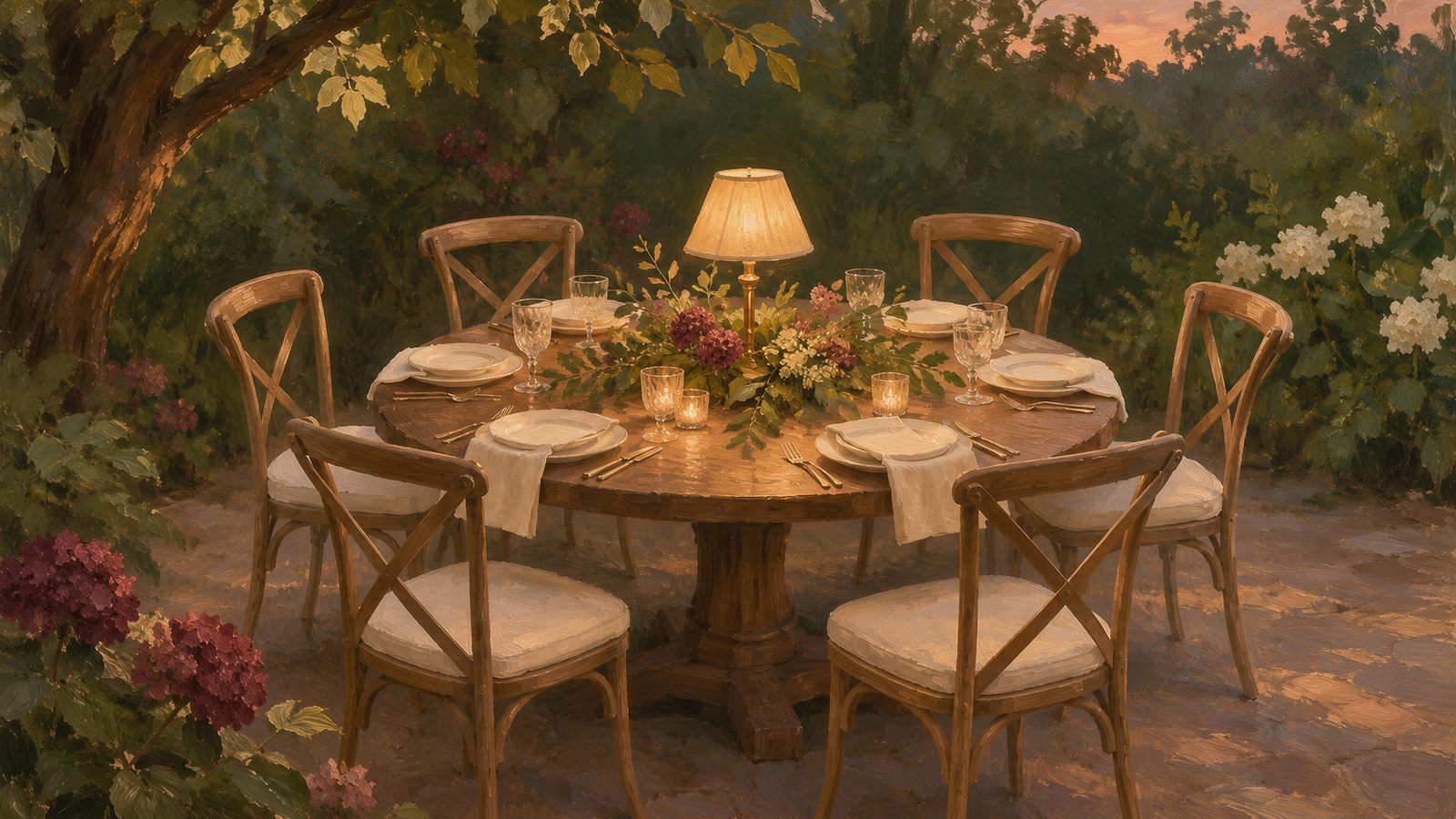
Green Wedding Shoes published an Ivy Manor editorial on November 13, 2026, featuring a real couple, Clarisse and Steph, modelling for a styled shoot in Temecula, California. The feature credits Moon Realm with planning and design, The Occupied Vase with florals and Gabriel Conover with photography. Its dinner setting is a single table for ten, with green and burgundy details and a shaded lamp. See the original feature and full creative credits.
That is the reference for this Weddings.io planning analysis. A styled shoot is a deliberately produced creative setting; the presence of a real couple does not make it coverage of their wedding day. The useful question for couples and planners is how to interpret an image thoughtfully, without assuming that it demonstrates every arrangement a live event would need. Here is a practical way to have that conversation.
Describe the feeling in one sentence
Before collecting more references, describe what you would like the celebration to feel like. You might want guests to feel as comfortable as they would at a dinner with close friends, or you might want the ceremony to feel enclosed by a garden. Keep the sentence specific enough that your planner can ask useful questions about it. Words such as elegant and magical may be sincere, but they need an explanation before they can guide a design.
Then identify two or three visible features that support that feeling. Perhaps the seating seems close enough for a shared conversation, the flowers sit below the faces of the people at the table, or the colour of the setting continues into a piece of clothing. Say what you notice. This gives your team something more useful than a request to reproduce the whole photograph.
Use the same sentence when you discuss alternatives. A different table, a simpler arrangement or another part of your venue may serve the feeling just as well. If the important part is an intimate dinner, the team can explore how to create that experience with your actual guest list. If the important part is a particular object, make that clear too. Both are legitimate starting points, but they lead to different conversations.
Ask what sits outside the photograph
An editorial image is a selected view of a setting. Before treating it as a layout, ask your planner which event functions are visible and which still need to be designed. Where would people arrive, put down a bag, collect a drink or move between parts of the celebration? What would the catering team need to reach? These questions let you enjoy the image while developing a complete plan around it.
Try narrating a short sequence rather than examining the picture as a collection of objects. Imagine guests finding their places, settling into a conversation, being served a course and getting up again. Ask the team to show how those actions would work in the proposed space. You are looking for a clear explanation of the event, not a reason to dismiss a creative reference.
The venue should also be part of that explanation. Ivy Manor’s own website distinguishes special events from productions and photoshoots, and says visits are by appointment. That is a useful reminder to ask about the arrangements for your own event directly with the property. Read the venue’s current information. A photographed setup does not, by itself, confirm availability, permitted use or the services included in a booking.
Test the table with the people who will use it
If a dinner-party atmosphere is what attracts you, begin with how people will sit together. Ask for a proposed layout using your actual groupings and the furniture being considered. Let the planner explain how the shape of the table affects conversation, the service approach and the view of anything happening elsewhere in the space. A pleasing overhead composition is one perspective; the experience from a chair is another.
For a sample setup, put the intended tableware, glassware and a representation of the flowers in their proposed positions. Ask where shared dishes, water or anything added during the meal would go. You do not need every final object to have this discussion. You need enough of the arrangement to understand whether the proposed design gives everyone a usable place at the table.
Include the different ways your guests may use that space. Someone may need a particular approach to their seat, an easy route out or a position from which they can follow a speech. Ask for the relevant information and involve the person in checking that it meets their needs. A carefully chosen position in the seating plan can matter more to that guest than another decorative detail.
Our earlier [guide to wedding table design](/blog/wedding-table-design-space-for-guests/) looks more closely at the space around each setting. Here, the aim is to carry that practical review into the inspiration discussion before a photographed arrangement becomes a final instruction to the rental or floral team.
Discuss outdoor lighting as an event decision
A pool of warm light can make a garden setting feel welcoming. When you bring a lighting reference to your planner, describe the effect you like and ask the venue and lighting supplier to propose an appropriate way to achieve it. Let them assess the equipment, placement and conditions for the actual space. An indoor-looking object in a photograph is not an instruction to take household electrical equipment outside.
Ask what guests would be able to see at each stage of the evening: the route to the table, the food and faces during dinner, and the way to the facilities or exit. A photograph may emphasize one area while leaving the surroundings dark. The event plan needs to account for both the atmosphere in that area and the other places people will use.
If lighting equipment would be moved or the programme would shift to another space, ask who handles the change and when it happens. Keep that responsibility with the agreed venue or supplier team. You should be able to understand the plan in ordinary language without choosing technical specifications yourself. Put the agreed effect, the proposed location and the person responsible alongside the rest of the design decisions.
Scale the idea through your own guest list
A small photographed arrangement can suggest an approach without showing how it would work across an entire reception. Once you know what matters to you, ask the planner to explain how that idea would appear in the complete layout. Would every table carry the same treatment? Would one area be more detailed while the rest of the design stays quieter? Which parts belong to the ceremony, dinner or another moment?
Compare alternatives with the same scope. If one proposal includes more tables, a different service arrangement or additional installation work, identify those differences before comparing the headline figures. Ask for the work, quantities, delivery and collection responsibilities to be explained in the actual offer. This is a way to understand the proposal rather than a claim that a particular style should cost a particular amount.
Request a simple running order that includes setup, guest arrival, meal service and collection. A space can accommodate the finished scene while still needing a workable route for bringing everything in. If several teams share a setup window, ask your planner how their work is sequenced and which responsibilities are included in the proposal. Keep that explanation beside the layout.
Also ask what happens when a preferred material or object is unavailable. Describe the qualities you want to preserve: perhaps colour, height, texture or the space around the setting. Give the team room to suggest an alternative, then agree which changes need your approval. A clear priority is more helpful than a vague instruction to find something similar after the original item has become unavailable.
Give colour a few deliberate jobs
A useful palette describes relationships between elements. Decide which colour is the background, which one should attract attention and where a quieter tone gives the eye somewhere to rest. You can have a rich design without asking every supplier to use every colour in equal amounts. Invite your planner or designer to explain how the proposed palette works across the spaces you will actually use.
Look at materials together when you can. Paper, fabric, flowers and glass may each express a colour differently. If a precise match matters, ask the relevant supplier how they would assess it and what variation to expect. If a looser relationship is part of the appeal, say so. The goal is a shared understanding of the look rather than an assumption that a colour name means the same thing to everyone.
Include the clothes you intend to wear in that conversation, while keeping the choices personal. A detail can connect two outfits without making them identical, or an outfit can remain distinct from the room around it. You and your partner should be able to explain what feels comfortable and like yourselves. Let the wider design support those choices rather than turning a photograph into a dress code for your relationship.
Keep creative credits attached to your references
When you save an image, save the original feature link and the creator credits with it. A cropped screenshot can lose the photographer, planner, florist and venue information that explains how the work came together. Keeping that context helps you discuss the reference accurately and gives the people responsible for it recognition. Credit is also different from permission to republish somebody else’s photograph.
Ask each professional you are considering to explain their own role. A planner’s work, a floral designer’s work and a photographer’s interpretation may all contribute to the impression you have taken from a feature. Find out who would develop and deliver each part of your proposal, who coordinates the handovers and who is responsible for explaining changes to the rest of the team.
Moon Realm describes itself on its own website as a planning and design studio. That supports the role credited in the source feature; it does not establish an endorsement by Weddings.io or promise availability for your date. Explore the studio’s own description of its work. Use the original suppliers’ information to understand the work, then make enquiries based on your own event requirements.
Turn the reference into an approval you can use
Before approving a design, ask for a summary that identifies the exact space, the proposed layout, the main visual priorities and the outstanding questions. Keep the relevant version of the proposal with it. If you approved the mood of an early presentation but have not yet agreed the objects, quantities or installation, make that status visible. Enthusiasm for an idea and an instruction to proceed should be easy to distinguish.
Choose a small number of checks that matter most to you. You might want to sit at the proposed table, see the relevant fabrics together or understand how an evening layout connects to the rest of the venue. Ask the team which review would best answer each question. A focused review can be more useful than repeatedly asking whether the final result will look exactly like a saved photograph.
For the next planning conversation, bring three things: the source feature with its credits, a sentence describing the feeling you want, and the questions your own event still needs answered. That gives the team a creative reference and a clear purpose. We think the strongest inspiration becomes more personal as the plan develops, because the decisions begin to reflect the couple and the people they are hosting. What would you carry from a garden editorial into your own celebration?